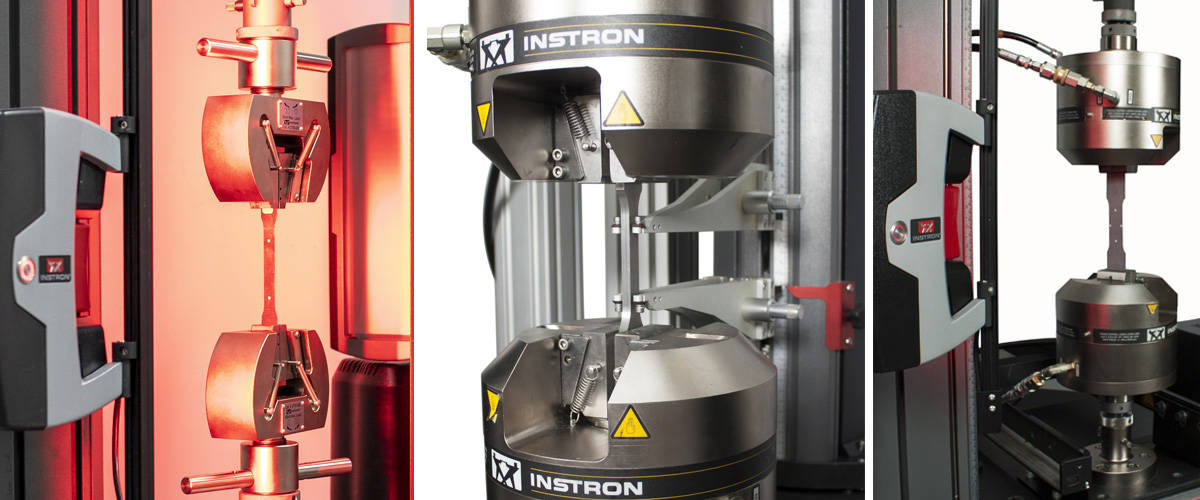
 View Instron on TEKEN44
To calculate the r-value, a test is performed to ISO 6892 and requires the use of axial and transverse extensometers. Where the behavior of true plastic width strain versus true plastic length strain is homogeneous, a single point calculation can be used. For material that exhibits inhomogeneous deformation, a regression method is recommended, and ISO 10113:2020 strongly recommends measuring transverse strain at multiple locations evenly distributed along the axial gauge length, to be averaged into one value. The AverEdge32™ feature of Instron's AVE2 non-contacting video extensometer can provide this capability, and these calculations can be done automatically in real time using the Bluehill® Universal materials testing software. An ISO 10113, ASTM E517, or JIS Z 2254 test is typically performed at the same time as ISO 10275, ASTM E646, or JIS Z 2253, the tensile strain hardening exponent (n-value). Sheet metal testing applications require calculations such as yield strength, yield point elongation, ultimate tensile strength, r-value and n-value. These calculations place a high physical demand on traditional contacting extensometers for measuring axial and transverse strain. They need to allow for enough travel to test the specimens through break, but small gauge lengths make it more challenging to ensure high accuracy of the measurements. Additionally, relevant ASTM and ISO testing standards have accuracy requirements that must be achieved. Historically, video extensometry is not frequently used in these applications, as most customers in the metals industry prefer traditional contacting extensometers and trust the reliability of the results. Significant advances in the technology of video extensometry offer metals testing customers other options. Not only do video extensometers like the AVE2 allow for simultaneous collection of axial and transverse strain data and reduce the maintenance required for wear and tear on knife-edges, they have also been shown to increase productivity and simplify testing. In addition, the AverEdge32™ feature has shown substantial improvement in reducing transverse strain measurement variability.
TEKEN44 Similar Products
ISO 6383-1 Tear Resistance Plastic Film and Sheeting
ISO 6872 Flexural Strength Testing of Dental Ceramics
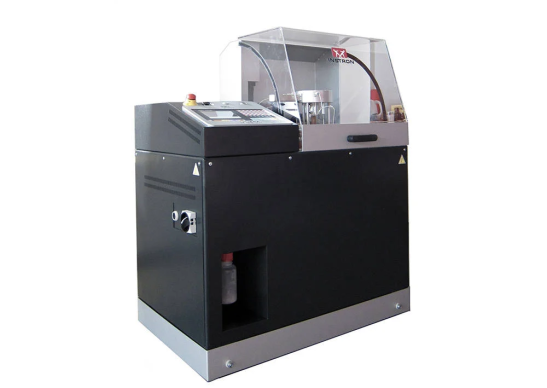
ISO 75 and ISO 306: HDT and VST Tests on High Temperature Polymers
ISO 813 Adhesion Strength of Rubber to Rigid Substrates
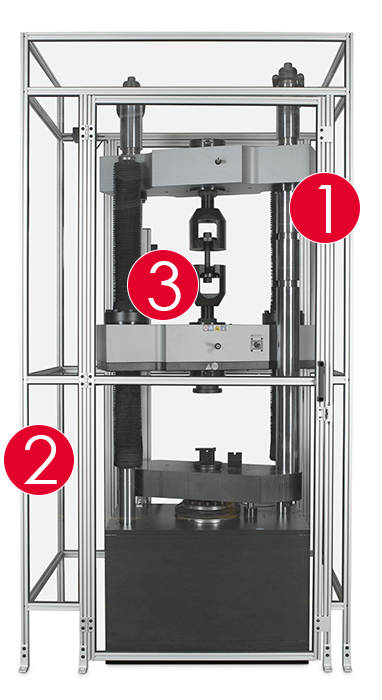
ISO 898-1 Mechanical Properties of Carbon Steel and Alloy Steel Fasteners
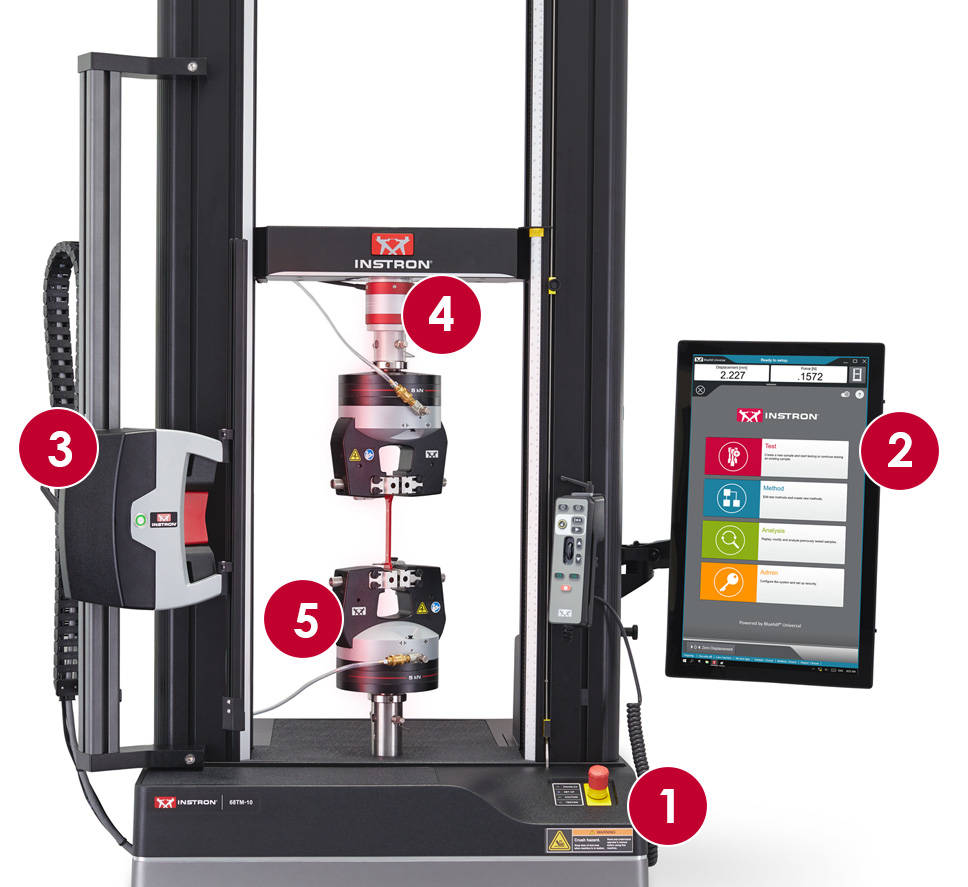
ISO 527-2: Tensile Testing for Plastics
Google Lens Search · visually similar products
The TEKEN44 product image was analyzed with Google Lens via the TEKEN44 MCP server to find 20 visually similar products from across the web.