PILODIST GmbH
PILODIST GmbH is a leading global supplier of thermal separation units and systems, specializing in distillation, extraction, thin-film evaporation, solvent recycling, and vapor-liquid phase equilibrium determination. Their products cater to research and development, quality control, and educational applications in the pharmaceutical, chemical, flavor and fragrance, and petrochemical industries.
All Products(6)
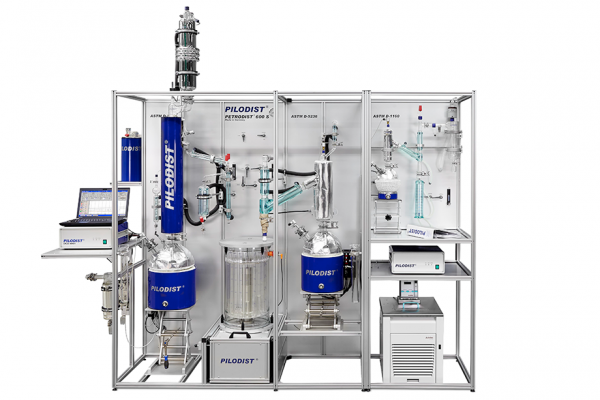
PETRODIST 600 S 3 ASTM procedures
combining 3 different internationally accepted ASTM procedures in 1 single system: ASTM D-2892 ASTM D-5236 ASTM D-1160 The crude oil distillation system is designed to work in semi-automatic operation mode and combines all required features of PETRODIST 100 S, PETRODIST 200 S and PETRODIST 300 M in a single system in the most economical way. One distillation procedure can be used at a time (alternatively but not simultaneously) by using the following central components which are used by all distillation methods. These common devices include the fraction collector (not for D-1160), central controller and laptop, vacuum supply and cooling thermostat.
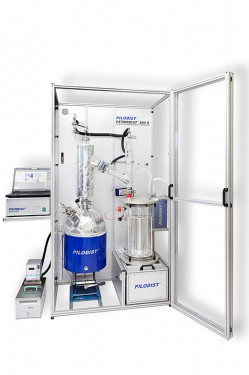
PETRODIST 200 S semi automatic
Crude oil distillation system for semi automatic operation according to ASTM D-5236 (Standard Test Method for Distillation of heavy Hydrocarbon Mixtures, Vacuum Potstill Method). The cuts are taken automatically according to the pre-selected boiling temperature or when the receivers are filled up. The vacuum tight fraction collector contains 9 receivers, their volume is related to the flask size. The control of the flask heating ensues either isothermally or according to the temperature difference between heating bath and flask. Thus an operation according to distillation rate is possible. All necessary accessories will be supplied together with the system. The installation requires water, nitrogen, compressed air and electricity.
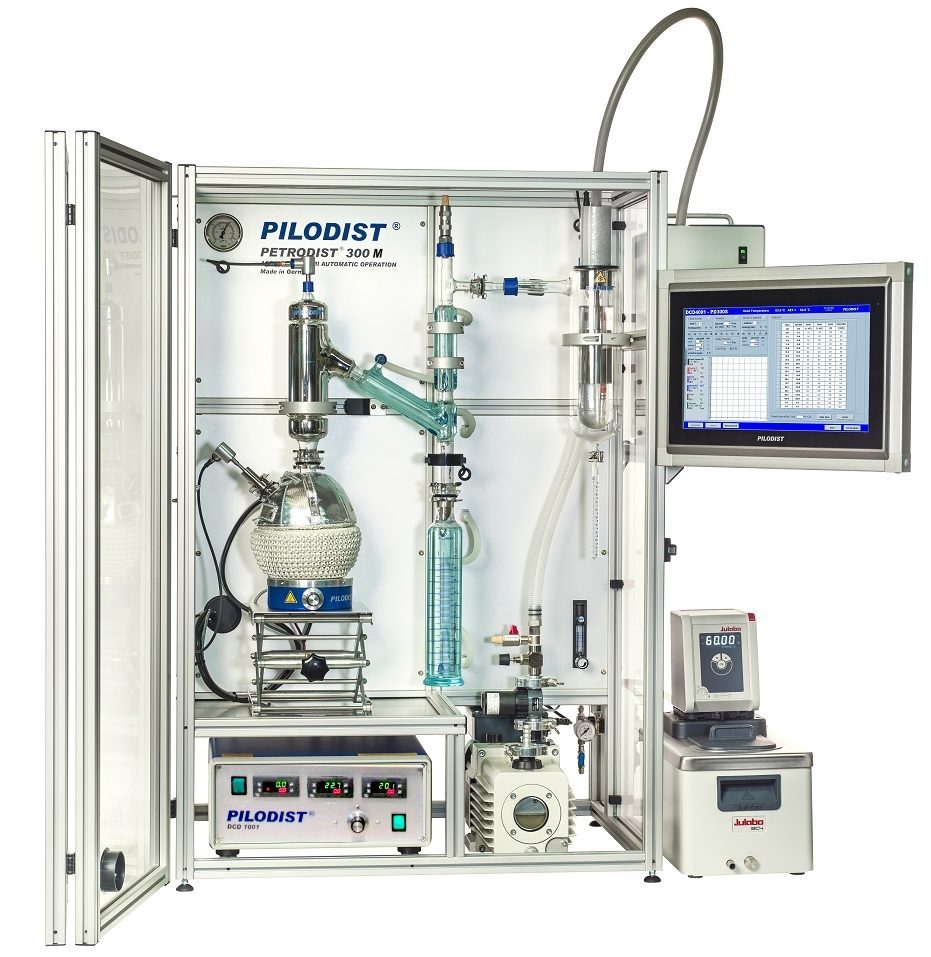
PETRODIST 300 M
Manual boiling analysis system according to ASTM D-1160. The charge, depending on the distillate receiver temperature, has to be filled in the flask. The distillation is performed from the Initial Boiling Point (IBP) to the End Boiling Point (EBP) by the operator. The criteria for a distillation end are: the EBP in AET-temperature is exceeded the distillate volume is exceeded the maximum limits of heating bath temperature or flask temperature are exceeded (automatic control) product cracking in the flask vacuum loss (automatic control) The distillate volume is measured by the operator in a temperature controlled receiver.
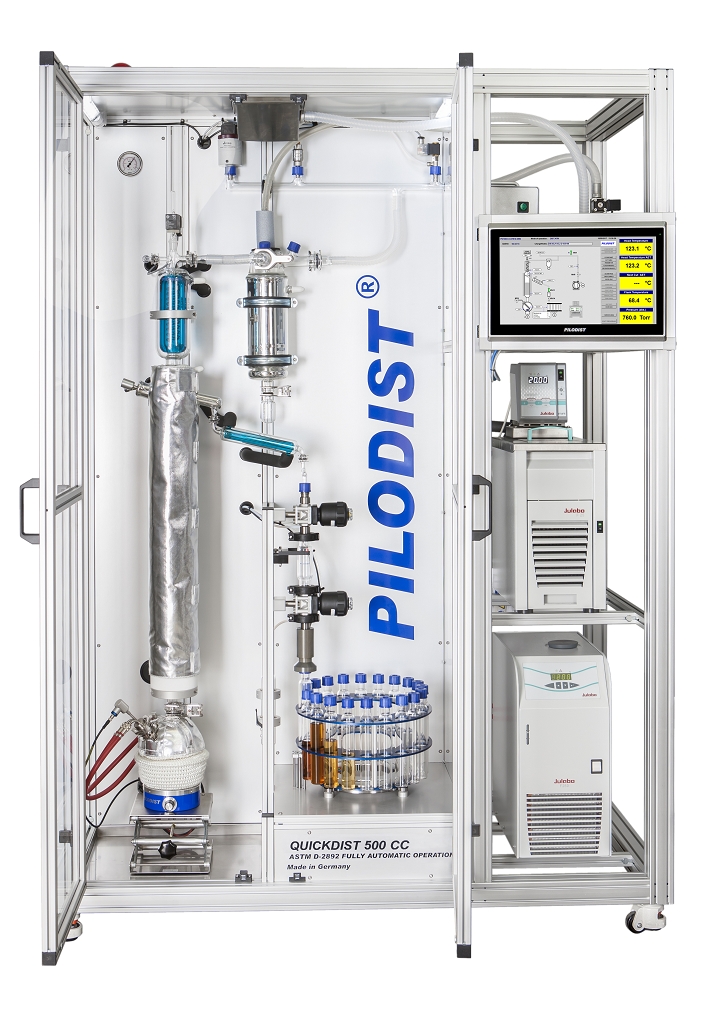
QUICKDIST 500 CC
Specially developed for the separation of hydrocracked or catalyst product samples into their different cuts (for example: Naphtha, Kerosene, Diesel). The unmatched timeframe of less than three hours is achieved in a fully automatic process through different pressure stages similar to ASTM-D2892. The system is equipped with a distillation column packed with high efficient SULZER EX packing to ensure a proper efficiency also under high throughput conditions. The fully automatic discharge system is optimized with minimum hold-up for a closed mass-balance also with small charges. The whole process is performed fully automatically (in PILODIST CC-version) from start to the final cut and can operate through 4 pressure stages down to 1 mmHg (Torr) absolute pressure without any user intervention. A quench coil and a special thermostat system reduces the intermediate cooling phases and in combination with a fast heat-up process the runtimes can be reduced to an unique minimum.
View Product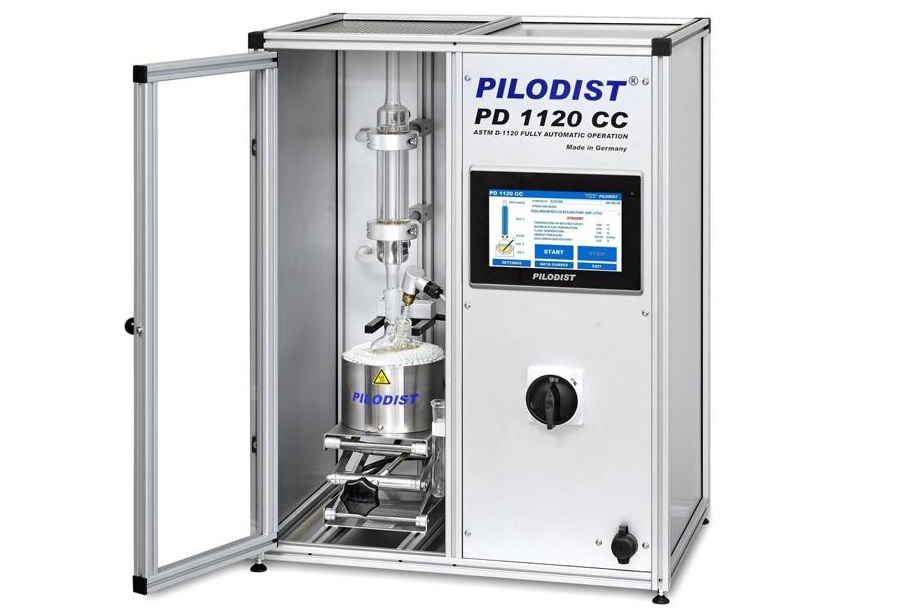
PILODIST 1120 CC
The system is designed for fully-automatic operation conforming to ASTM D1120 to determine very precise and reproduceable the boiling point of engine coolants and brake fluids. A complete test can be done in approx. 8-15 minutes. An indelible print out with all results is peformed automatically and additionally a PDF-file can be created for network connectivity. PILODIST 1120 CC can be operated in different measuring modes to be selected via an integrated touchpanel. All parameters are indicated during the measuring process as well as the results. The basically included test methods are: REFLUX BOILING POINT (ASTM D1120) EQUILIBRIUM REFLUX BOILING POINT (SAE-J1704) As a special feature there is an additional software available for measurements also the following characteristics according to SAE-J1703 & J1704: WET BOILING POINT CHEMICAL STABILITY HIGH TEMPERATURE STABILITY All methods are also valid for the test standards: ISO 4925 FMVSS 116
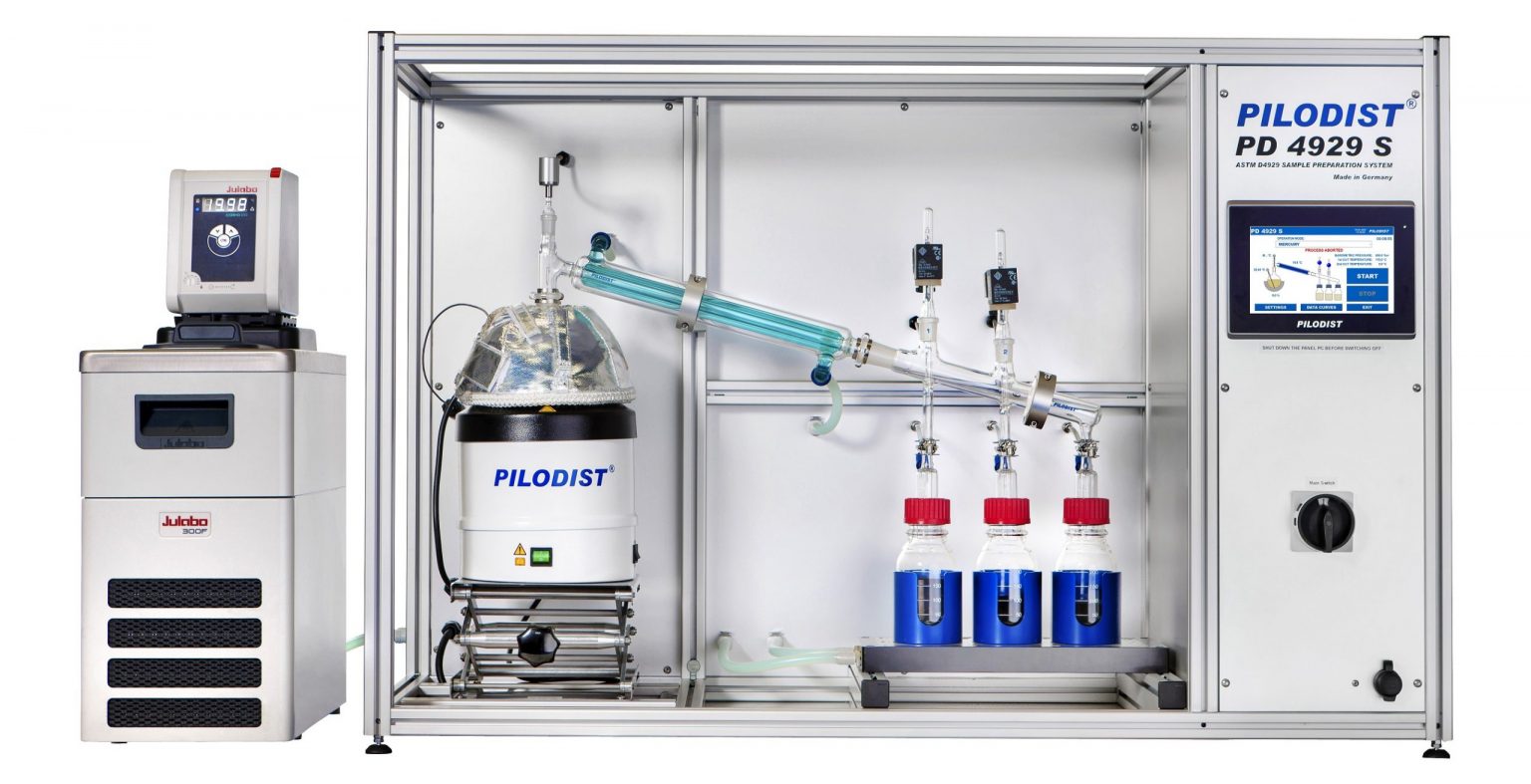
PILODIST PD 4929 S
This standard test method for the Determination of Organic Chloride Content in Crude Oil requires a crude oil distillation up to 204°C with a glass apparatus to achieve the naphtha cut for the chloride content analysis. Prior art is the sample preparation done by a complete manual distillation, which is time consuming and requires full attention to achieve a correct and precise cut point. The new PD4929S performs this distillation in an automatic and precise computer controlled process with an apparatus strictly according to the ASTM standard method. A unique cooling system for the distillate receivers allows and easy, safe and quick receiver interchange and the direct storage of the sample in standardized GL45-bottles.