

NESA S.r.l.
An Italian company specializing in the design, production, and installation of advanced equipment and turnkey systems for environmental and industrial monitoring, remote control, and IoT solutions.
All Products(13)
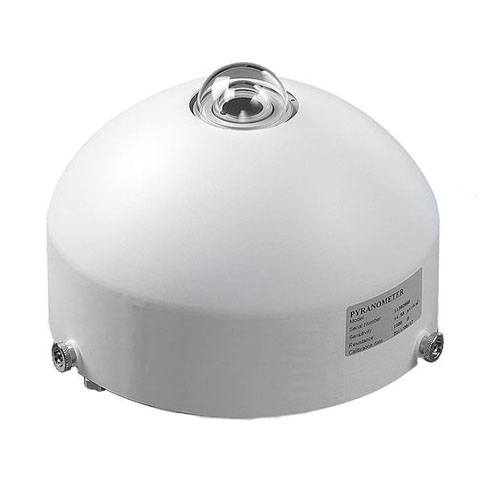
Heating and ventilation unit for RSG2std RSG-VU
The heating and ventilation unit RSG-VU is meant to be used with NESA Secondary standard solar radiation sensors and can be used outdoor under any weather conditions. Makes the solar radiation sensor compliant with IEC 61724-1. The ventilation of the instruments increases the precision of the measures by making the pyranometer’s temperature uniform, in particular it avoids the deposit of dew and frost on the optical parts of the sensors and reduces the off-set caused by the cooling of the dome compared to the instrument’s body. It’s possible to use the heating under extreme environmental conditions to prevent ice formation on the dome of the pyranometer (when the heating is on, you should consider that the off-set may increase, therefore we suggest the use of the heating only for the time necessary to remove snow or ice formed on the instrument’s surface).
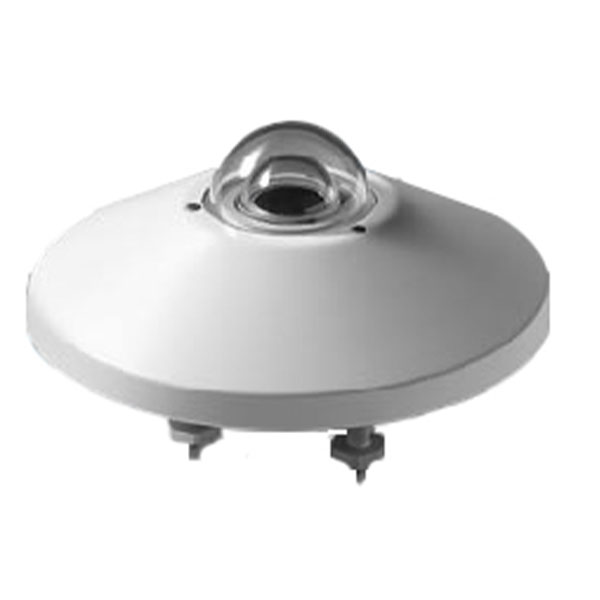
Global solar radiation sensor (A Class) RSG2std
Class A (Secondary Standard) global solar radiation sensor (pyranometer) with double thermopile. Designed to measure the global component of the sunlight spectrum between 0.3 µm ÷ 3 µm, according to the cosine law. Compliant with WMO standard for environmental monitoring, it’s also an ideal instrument on photovoltaic applications according to IEC-9060 and IEC-17025. A high quality instrument that, thanks the different types of standard signal output (voltage or current) or digital RS485 with ModBus (MCS option), can be easily interfaced with any acquisition system. Each instrument is supplied with calibration certificate, and relative instrumental constant. The sensor is available with heating and ventilation units (code VU), in accordance with IEC 61724-1.
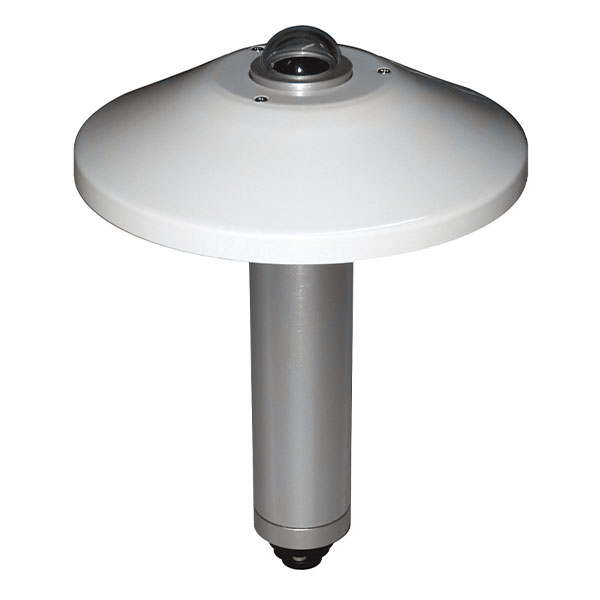
Global solar radiation sensor (C Class) RSG
Global solar radiation sensor (pyranometer) with thermopile, C class. Designed to measure the global component of the sunlight spectrum between 0.3 µm ÷ 3 µm, according to the cosine law. Compliant with WMO for environmental monitoring, is also an ideal instrument on photovoltaic applications according to IEC-9060 and IEC-17025. A quality instrument that, thanks the different types of standard signal output (voltage or current) or digital RS485 with ModBus, can be easily interfaced with any acquisition system. Each instrument is supplied with calibration certificate and relative instrumental constant.
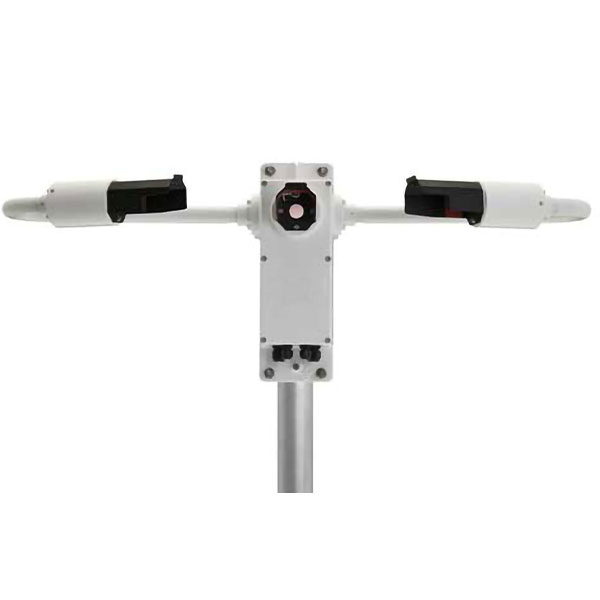
Visibility and present weather sensor PWS
Biral visibility and present weather sensor. Visibility range: 10m ÷ 50km (selectable full scale 2km, 10km, 20km, 32km or 50km), recognizing the type and amount of precipitation (presence of fog, haze, smoke, sand, drizzle, rain, snow and precipitation). This sensor has the features of the disdrometer and visibility measuring in a compact solution. Infrared measuring principle with distinction of phenomena according to WMO regulations reference table 4680 and 9328 ICAO standard. Standard output: RS485 (analogical output and heater option available). This sensor is suitable for applications in various fields of environmental monitoring, and is particularly suitable for the AWOS weather stations in the aeronautical field. Easy to install, requires no periodic calibration and it’s protected from overvoltage and corrosive agents.
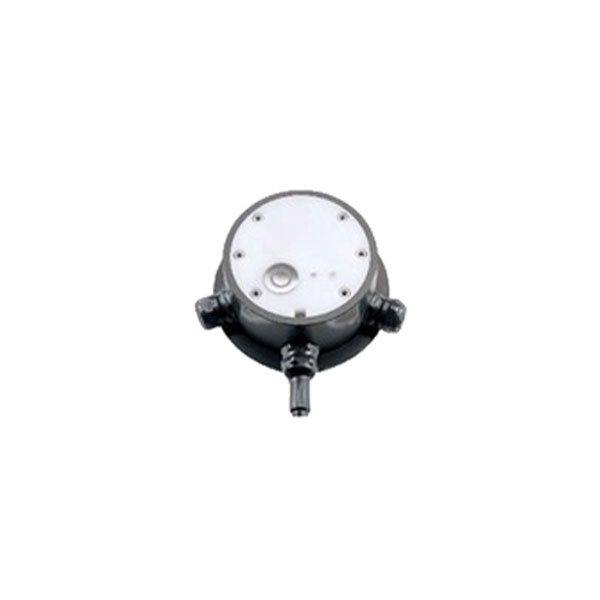
Road surface status sensor SSA
Carriageable sensor for measuring the physical and chemical road surface features, allowing to know the state of the road and therefore start the cleaning actions or prevention, for example against the ice formation or snow/hail build-up. The transducer allows to acquire various types of information as the temperature, the road surface status between dry / wet / moist / ice / snow / salt-residue and also provides an evaluation on critical humidity. Easily removable for road maintenance. Available with RS485 output.
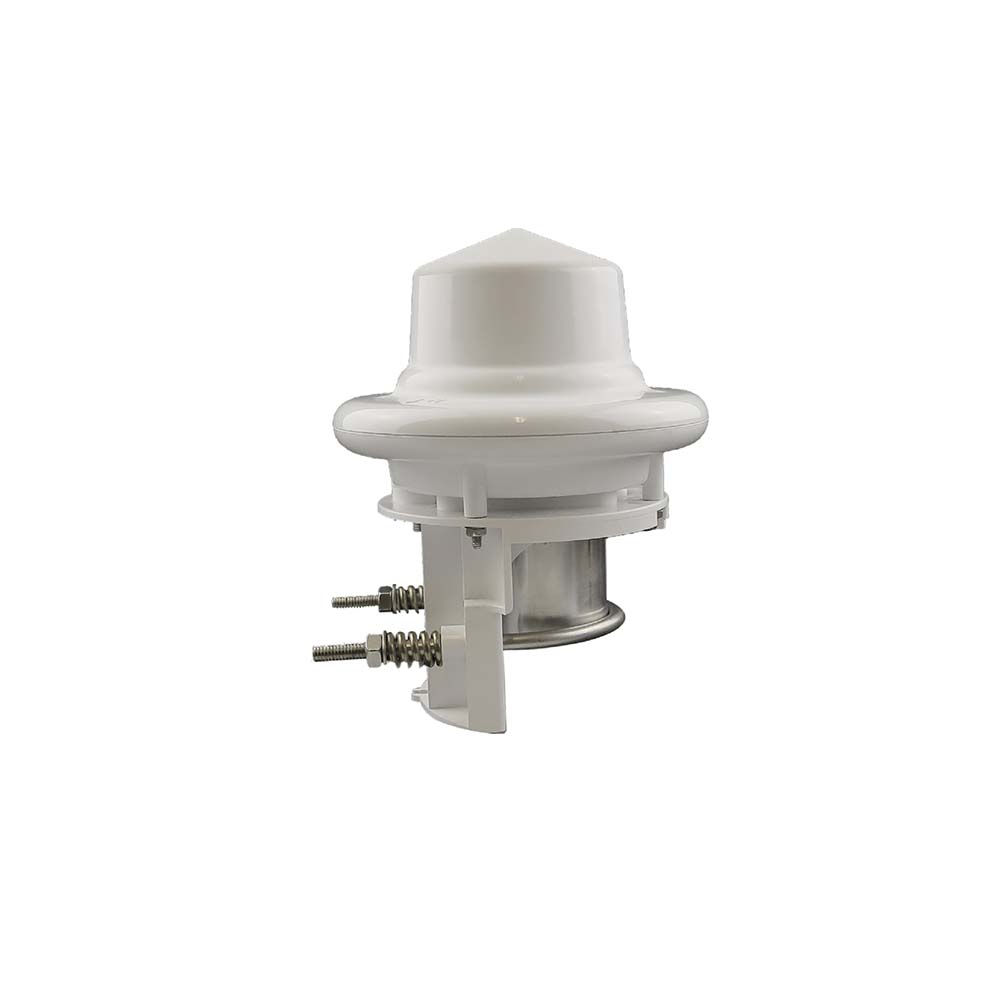
Radar disdrometer – Precipitation type and intensity detection DIS
Professional electronic sensor of the family WSxxx based on doppler radar technology (24Ghz), to determinate the precipitation (rain, snow, sleet, freezing rain, hail, drizzle, no precipitation, codes according to SYNOP 4677). The intensity of the rain/snow/hail and the relative quantity, are determined from fall speed and from the size of the drops. The type of precipitation is instead determined by the different speed of fall. The sensor has an electrical output in digital RS485 with Modbus protocol. This sensor is suitable for applications in various fields of environmental monitoring, and is particularly suitable for aeronautical applications in meteorology and road environmental monitoring. Easy to install, no periodic calibration required and it’s protected from overvoltage and corrosion. Suitable also in photovoltaic applications thanks to low energy consumption (standard <1 VA, with heating max 10VA).
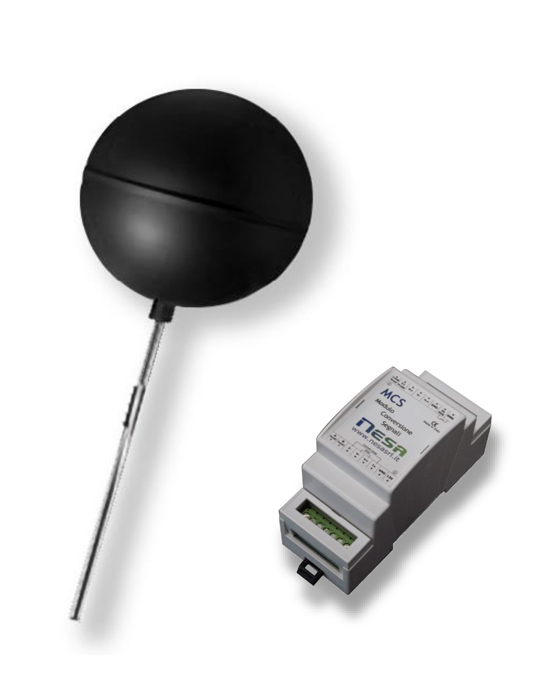
Black globe air temperature sensor GTA
Sensor for measuring the temperature induced by heat on a black body. Strong and compact, it’s made of copper with a treatment to protect it against oxidant agents. Compliant with Annex.8 WMO standards for environmental monitoring applications. Easy to install and interface with any data logger (4 wire measure with Pt100). The sensor is equipped with electrical protection and available with different signals output, normalized voltage or current 0÷1Vdc, 4÷20mA or RS485/Modbus (MCS option).
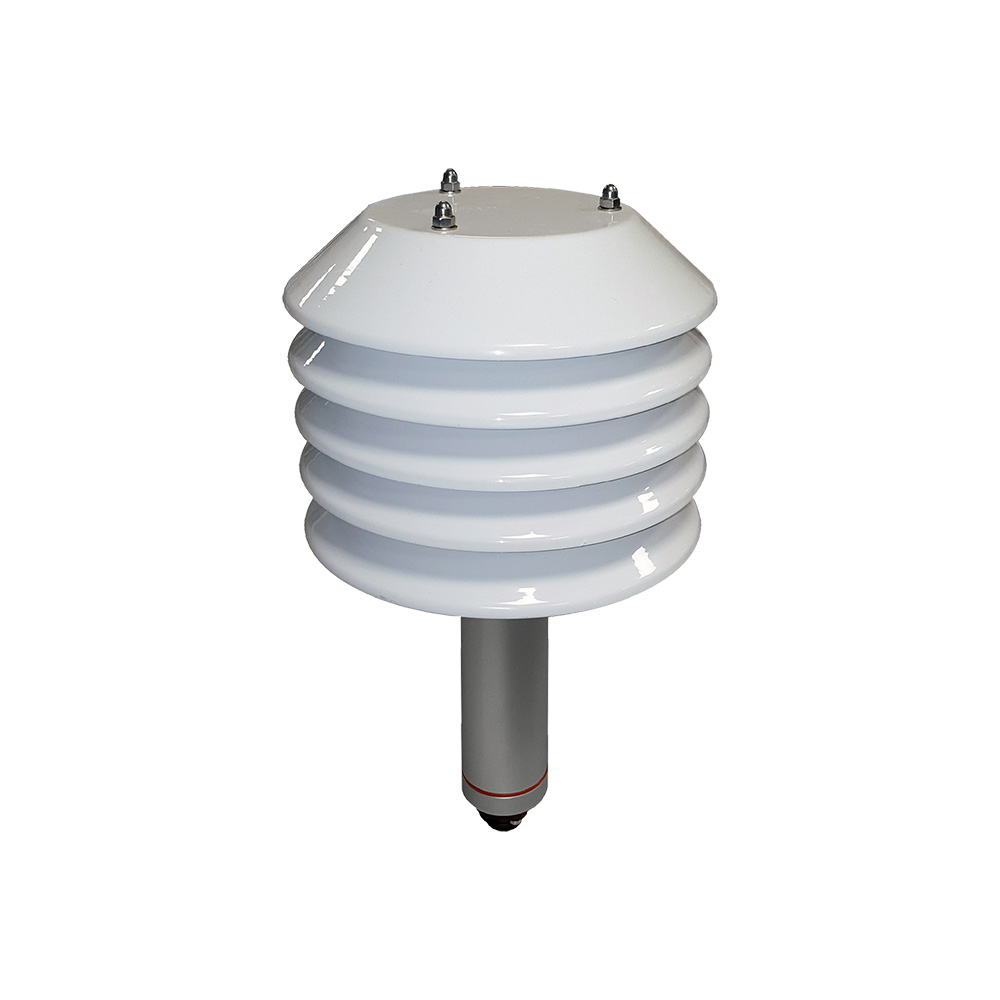
Outdoor air temperature sensor TA
Sensor for measuring outdoor air temperature, precise and reliable, compact and robust, made of aluminum alloy with anodizing treatment for protection against salt and oxidizing agents. Fully compliant with WMO Annex.8 standards for environmental monitoring applications. Extremely fast response time (<10s). Easy to install and interface with any datalogger (4-wire measurement). Available with Accredia certification (ISO17025). The sensor is equipped with electrical protections and is available with different signal outputs and with forced ventilation.
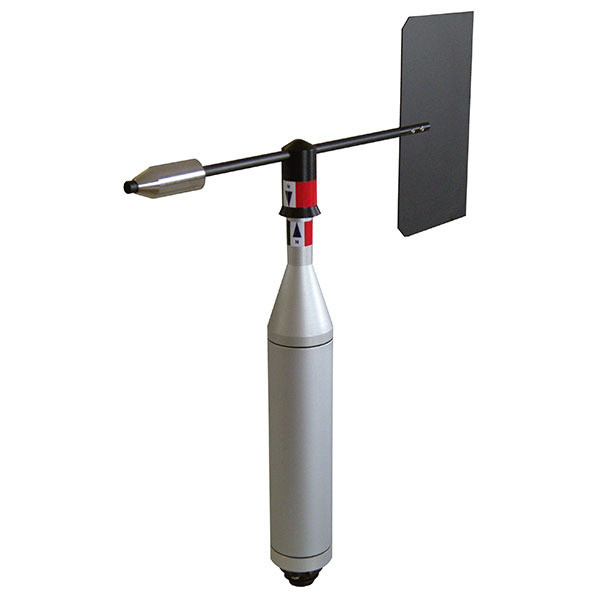
Wind direction sensor DVE
The sensor for wind direction measure (Gonio-anemometer) is made of materials with high reliability and durability, which maintain for a long time the features of sensitivity and precision. The mechanical body shape allows to resist at high wind speed or squalls (up to 300km/h). Using a special magnetic encoder ensures very high resolution and accuracy by eliminating any mechanical friction in a full operating angle of 360°. The output signal is normalized in voltage or current (4÷20mA or 0÷2Vdc), or digital on RS485/Modbus, available with heater at low power (5W@12Vdc). The sensor is manufactured according to standard WMO (World Meteorological Organization) and to EN 15518-3:2011 norm.
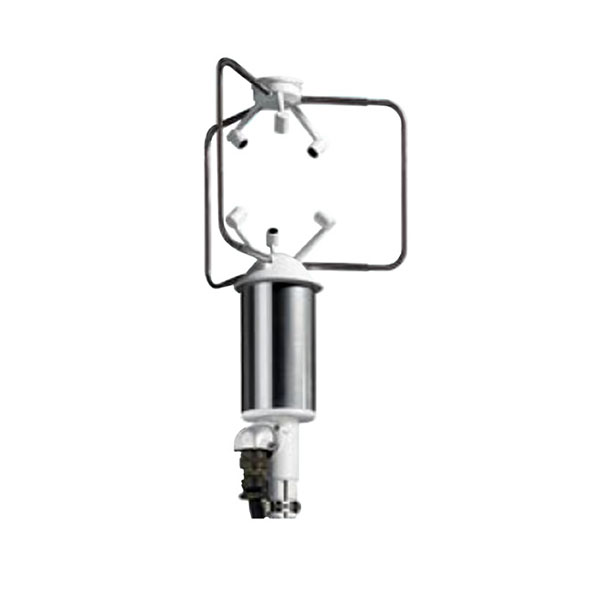
Triaxial ultrasonic anemometer ANEST
The ultrasonic sensor ANEST is a triaxial anemometer able to measure the wind speed and direction, the U-V-W Cartesian components, sound speed and sonic temperature, with a very high precision. Made of resin and anodized aluminium alloy, it’s precise and extremely reliable in all conditions with high dynamic response. The easy use and installation, makes it an effective instrument in environmental monitoring applications, where for various reasons, the regular maintenance of equipment can’t be easily done, such as for mechanical anemometers. Available in analogical voltage or current output (4÷20mA, 0÷1V, 0÷5V) and digital (ModBus RS485) versions.
View Product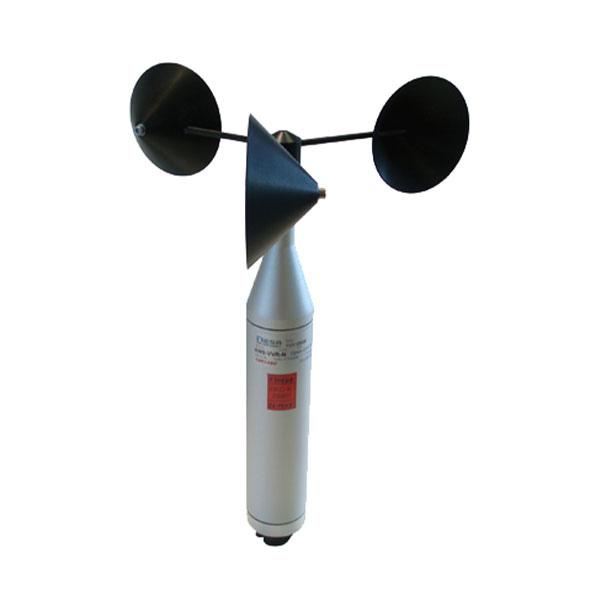
Wind speed sensor (First Class) VV1
First Class anemometer with very high precision, manufactured to meet the strictest standards for measuring the wind such as the IEC61400-12 for eolic monitoring. They are high performance instruments, certificated MeasNet, made in metal with high quality materials to ensure reliability and durability, allowing to maintain over time the initial features of sensitivity and precision. They are compliant with WMO norms (World Meteorological Organization) and to EN 15518-3:2011 norm. Available with different signal outputs, normalized voltage or current 0÷2Vdc, 4÷20mA or RS485/Modbus, and a heated version with low consumption (<5W @ 12Vdc).
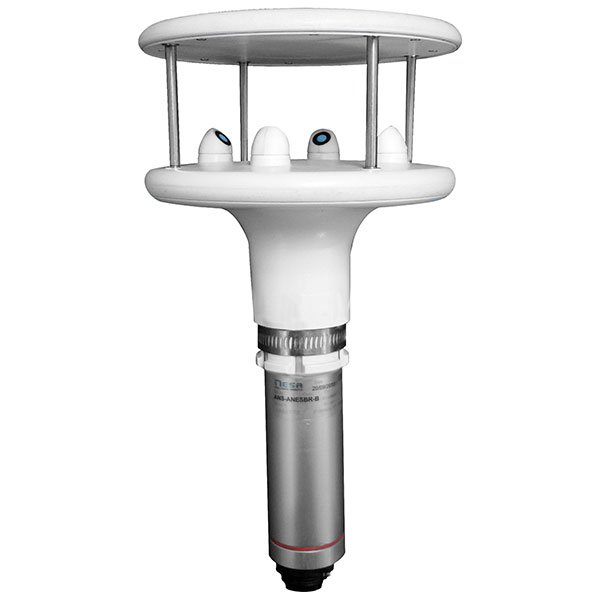
Biaxial ultrasonic anemometer (up to 90m/s) ANESB
The ultrasonic sensor ANESB is a biaxial anemometer for measuring wind speed and wind direction, capable of detecting the wind characteristics along two orthogonal axes X, Y, on the horizontal plane and their resulting cartesian vector. Very robust body in resin and anodized aluminum alloy for outdoor use. Linear, precise and extremely reliable in all conditions with high dynamic response. The easy use and installation, makes it an effective instrument in environmental monitoring applications, where for various reasons, the regular maintenance of equipment can’t be easily done, such as for mechanical anemometers.